
Week 4
Choose one element /tool of Web 3.0 and discuss how it could be used by an information service, give an example? What are the benefits or barriers? For example, think of augmented reality, virtual reality, Internet of things etc.
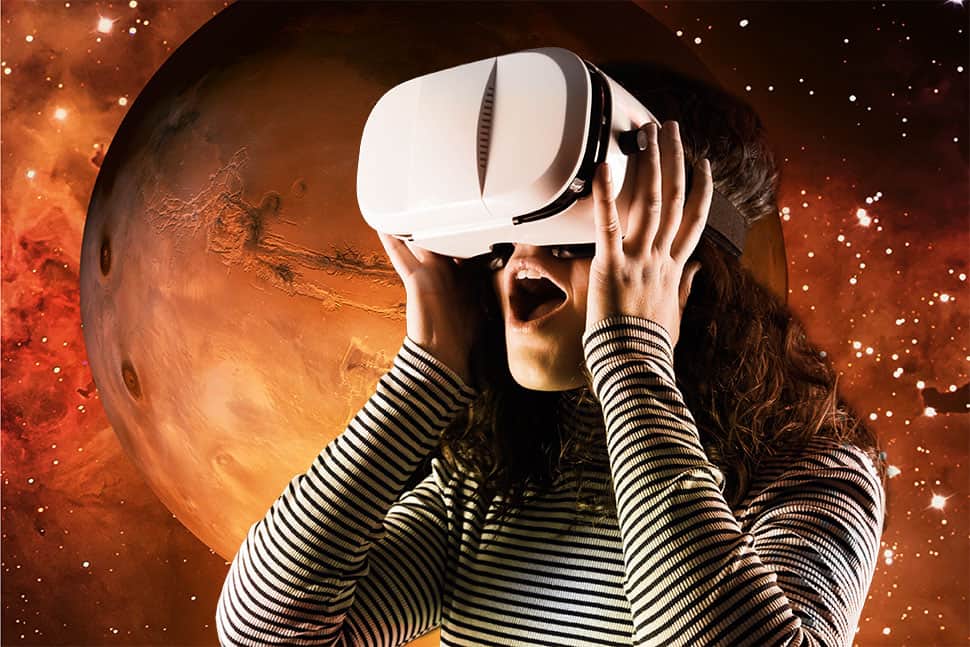
Libraries are always incorporating new technologies into their spaces and Virtual Reality (VR) has been offered to patrons of the GLAMR sector. VR “involves using 3D graphics and advanced interactions to immerse a real-world user in a simulated environment”(Oyelude, 2018). Libraries in particular have been trialling and bringing VR technology into their spaces as we move into the future. You only have to look at our own Adelaide City Council Library. They have an innovation lab where patrons can book in to experience and learn how to use VR technology (City of Adelaide, 2020). MOD. at UniSA also uses VR in parts of their exhibition which allows patrons to completely engage with the museum in a new way. The public libraries goal is to bring VR to their communities. Digital technologies like these are not common and it gives people of the community an opportunity to use explore new technology (Figueroa, 2018). Below are some benefits and disadvantages of having this technology in libraries:
Benefits
- Ability to engage younger patrons and resonate with them (Oyelude, 2018)
- Creating and developing educational opportunities (Stambol, 2019)
- Immersive storytelling used for conveying information (Oyelude, 2018)
- Accessibility – “virtual reality content creation is also becoming more accessible, especially through more widely available 360-degree video recording equipment” (American Library Association, 2017).
- Reaching many unlikely users and helping them discover VR technology (Stambol, 2019)
- Affordability – usually expensive but there are low cost alternatives. VR apps such as Google Cardboard have been developed to be used with laptops, iPads, mobile device and electronic whiteboards. Students, teacher and library clientele can use free apps such as 360 Cities to explore VR technology( Oyelude, 2018).
Barriers
- Affordability/Cost- advanced technology can be very expensive and therefore limit the ability for libraries to afford quality VR technology such at Occulus, if it doesn’t fit into their budget (American Library Association, 2017)
- Issues around consent of using VR technology, especially as children are required to have signed consent forms from their parents/guardians (City of Adelaide, 2020)
- Appropriate space required to use the VR equipment as you don’t want users hurting themselves of disrupting other library patrons
- Issues surrounding the access and use of VR due to the digital divide
- Concerns regarding privacy as there are currently a lack of policies surrounding VR (American Library Association, 2017).
References
American Library Association. (2017). Virtual Reality. Retrieved from http://www.ala.org/tools/future/trends/virtualreality
City of Adelaide. (2020). Innovation Lab. Retrieved from https://www.cityofadelaide.com.au/community/library-services/computers-hubs-labs/innovation-lab/
Figueroa, M. (2018). In a Virtual World How school, academic, and public libraries are testing virtual reality in their communities. Retrieved from https://americanlibrariesmagazine.org/2018/03/01/virtual-world-virtual-reality-libraries/
Oyelude, A. A. (2018). Virtual reality (VR) and augmented reality (AR) in libraries and museums. Library Hi Tech News, 35(5), 1-4. doi:http://dx.doi.org.access.library.unisa.edu.au/10.1108/LHTN-04-2018-0023
Stambol. (2019). 3 Reasons VR at Your Local Library is Awesome. Retrieved from https://www.stambol.com/2018/02/05/3-reasons-vr-local-library-awesome/
 Akrati's University Journey
Good overview of the use of VR in libraries, with concrete examples of its use. You have also given a good overview of the benefit and barriers to such technology. Although sophisticated VR systems are expensive, there are much cheaper options available that libraries are purchasing now.
LikeLike